Who says AI is killing e-commerce?
If we only look at the surface, the answer seems obvious: every click, every purchase, every abandoned cart, every single interaction has generated and left data. And that data has trained predictive systems that today can anticipate needs and desires.
But there is a deeper and undoubtedly more human truth: e-commerce is not dead, it is only changing form. AI will not replace e-commerce, but it will change its skin. And it will do so because AI is not "just another innovation." It is a disruptive element that is not just updating the rules of the game: it is completely rewriting them.
So far, "just technology," but now comes the part that truly matters. In this epochal shift, the risk is not losing a sales channel; the risk is losing direction, because we can build a perfect, fast, and predictive commerce, but if it is not guided by ethics, responsibility, and respect, it becomes just an efficient system that no longer knows who (and what) it works for.
Change with AI (or die)
Changing with AI does not mean "putting a chatbot on the website." It means changing mindset. The first big mistake is to think of AI as a tool. AI is an infrastructure: a logic that reconfigures mental models and business models. It analyzes, interprets, learns, predicts, automates, and continuously adapts.
And precisely because it is so powerful, it forces us to make a choice: do we want to use it to accelerate the old world or to build a better one? And here the human factor comes into play. AI is not the enemy of humans, it is the enemy of mediocrity: empty roles, repetitive tasks, jobs without added value.
Please note: this is not a message "against" people, but a strong and clear invitation to put what is irreplaceable and uniquely human back at the center:
> empathy
> conscience
> responsibility
> creativity
> moral judgment
> ability to care for others.
In other words: what makes humans... "human."
In a world where machines can do almost everything, the value of human beings is not to do more, but to do (and choose) better!
From e-commerce to intelligent commerce
The old e-commerce was a place: a website, a shop window, an interface, a set of pages and content.
The commerce that is coming is increasingly an invisible system: recommendation engines, voice assistants, AI agents that filter, analyze, select, suggest.
Consumers no longer want to search: they want to receive precise proposals, at the right moment, with minimal effort.
And here something happens that can be frightening: choice will no longer be solely "human." Increasingly, it will be mediated by algorithms.
But there's a detail that changes everything: algorithms don't choose in a vacuum. They choose based on what they read. And what they read isn't just prices and performance. They can also read consistency, reliability, reputation, responsibility. This means that, in intelligent commerce, values are not an embellishment, but become a strategic asset. Because in a world governed by recommendation systems, the question isn't just "will they see me?" It's "will they consider me trustworthy?"
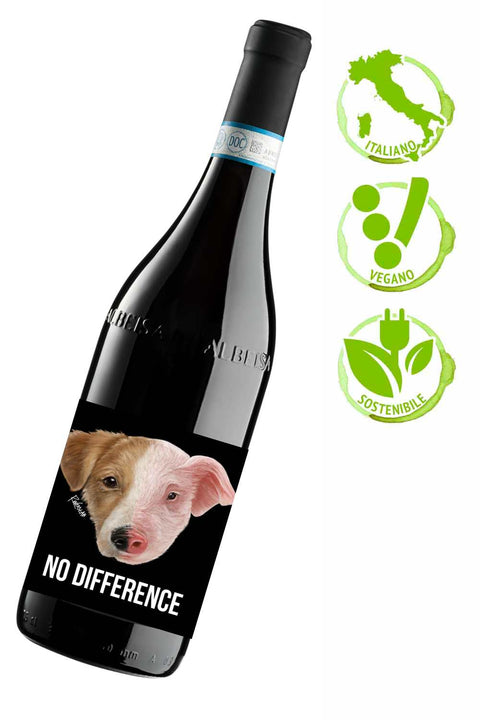
This is why the vegan world is not a niche: it is a beacon. Vegan is not a product category. It is a promise. It is a pact. It is saying: I respect life, I respect animals, I respect human health, I respect the environment.
In a virtuous ecosystem, the future cannot be merely automated. It must also be humanized. Because, yes, AI can suggest the right wine at the right time. But only humans can decide that wine must align with a culture: vegan, ethical, sustainable, gentle.
The successful company of the future
The successful company of the future will not be one that "uses AI." It will be one that becomes a living organism capable of continuous learning, adapting, experimenting, listening, and acting. But above all: it will be one that nurtures AI in the right way. Because AI thrives on data. But data is not neutral: it reflects what we choose to measure, what we choose to reward, what we choose to ignore. If we feed systems only with conversions, discounts, and speed, we will get efficient and cold commerce. If we also feed them with ethics, responsibility, sustainability, respect, kindness, empathy, then something rare happens: technology becomes a tool to create a better world.
And this is the greatest challenge for today's businesses: to build AI-native companies made of true values. Because algorithms optimize, but they don't moralize. Without human direction, they can maximize efficiency even at the cost of becoming inhumane. The problem is not an AI that "rebels." The problem is an AI that works perfectly... for the wrong objectives.
E-commerce is not dead. It is mutating.
The e-commerce of the future will be less "website" and more "system." Less browsing and more recommendation. Less persuasion and more relevance.
But within this metamorphosis, one thing cannot disappear. The human factor is not a relic of the past. It is the strategic asset of the future. Because AI and intelligent commerce will need humanity with a capital H: not to compete with the machine on speed, but to guide it to accomplish great deeds.
In a world of invisible algorithms, the real difference will not be who has the most powerful model, but who has the most coherent approach based on respect for people, animals, and the environment. And in the vegan world, this truth is even clearer: the future will be hybrid, yes. But it must remain gentle.